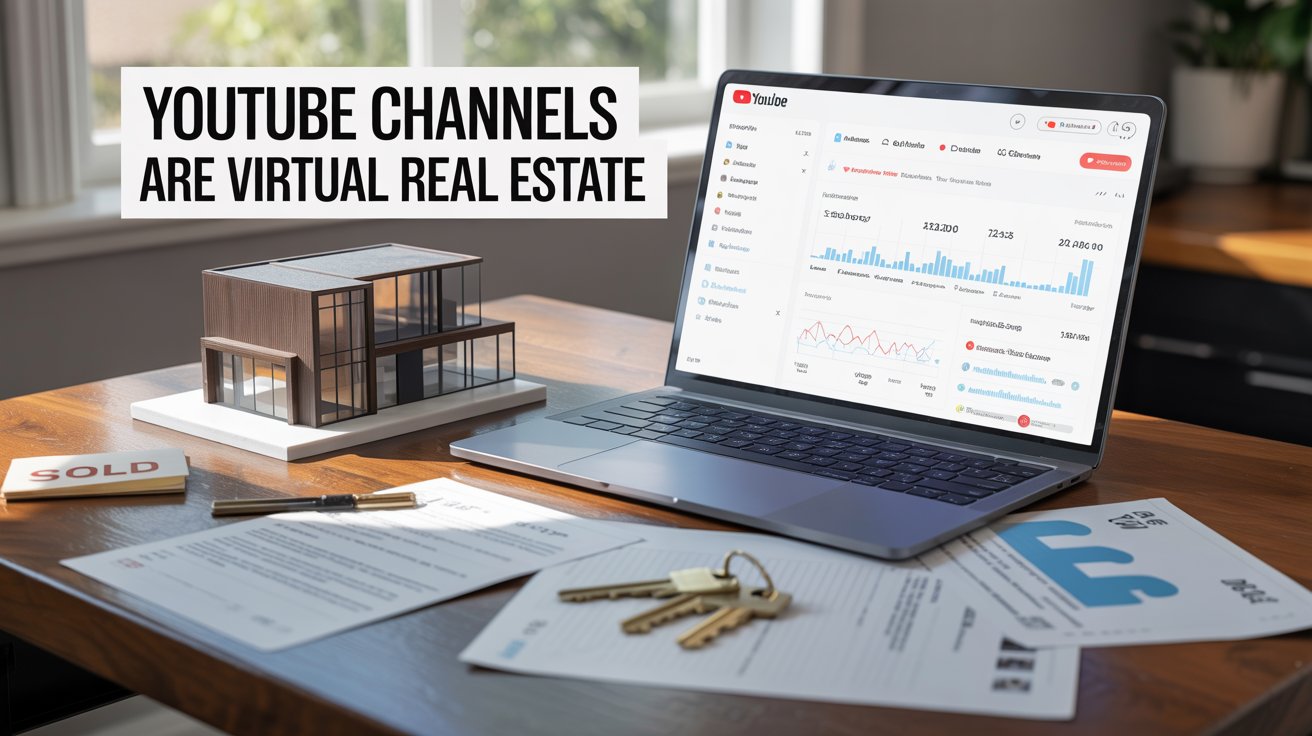
For years, the public has framed YouTube as a “creator platform,” a digital stage for personalities, vloggers, and entertainers. But as we move through 2026, a new class of serious operators has emerged. These are not creators; they are asset managers. They see YouTube channels exactly how a real estate investor sees a physical property: as an asset you build, optimize, hold for consistent cash flow, and eventually sell for a significant multiple.
This shift in perception is not merely theoretical or a trend driven by “get-rich-quick” schemes. It is a fundamental evolution driven by rising advertiser competition, the total maturity of platform-level monetization, and the institutionalization of content production. For executives, founders, and investors, the core question has shifted. In this blog, you will learn how to make money on YouTube by managing and scaling channels like strategic assets through faceless YouTube automation, without appearing on camera.
What Does It Mean to Treat a YouTube Channel as Virtual Real Estate?
Calling a YouTube channel “virtual real estate” is far from a metaphor; it is a rigid operating model. In the physical world, you don’t buy an apartment complex simply to admire the architecture. You buy it for the monthly rent, the potential for appreciation, and the eventual exit value. When you apply this logic to YouTube, the “building” is the channel itself, the “tenants” are the advertisers paying for space, and the “infrastructure” is the library of content you’ve produced.
A YouTube channel officially transforms into virtual real estate when it detaches from the “influencer” model. Real estate must be transferable. By utilizing professional YouTube automation systems, we create channels with predictable traffic sources and monetization that is entirely independent of personality. This creates a brand-safe environment for advertisers and a transparent cash flow for the owner. At NextGlobalWave, we prioritize systems first and personalities last, ensuring that the asset remains valuable regardless of who is behind the keyboard.
How Do YouTube Channels Compare to Traditional Digital Investments?
Executives often weigh YouTube automation against established digital investments like SaaS products, e-commerce brands, or affiliate blogs. While each has its merits, YouTube offers structural advantages that are difficult to replicate elsewhere. First, there is the element of “Built-in Demand.” YouTube is the second-largest search engine on the planet. Unlike a SaaS product or a new blog that requires a massive external marketing budget to find an audience, YouTube’s algorithm-driven discovery through YouTube SEO. It finds the audience for you.
Furthermore, YouTube allows for “Monetization Stacking.” On a traditional website, you might rely solely on display ads or affiliates. On YouTube, you can simultaneously layer AdSense revenue, high-ticket sponsorships, lead generation for backend businesses, and digital product sales. Finally, there is the factor of asset liquidity. A clean, automated channel with a stable “Revenue Per Mille” (RPM) is a highly liquid asset. Because the production systems are documented and the revenue is verified by Google, these channels are increasingly being bought and sold in private marketplaces, much like a stabilized multi-family home.
Ready to grow your YouTube channel?
Is a YouTube Channel Truly a Digital Asset You Can Profit From Long Term?
The longevity of a YouTube channel depends entirely on its structural integrity. Many channels fail because they are built on the “sand” of temporary trends or viral gimmicks. To treat a channel as a long-term profit engine, it must be designed around evergreen demand. This means creating content that remains relevant for six months, two years, or even five years after it is posted.
A well-constructed automation channel behaves like a content-driven cash-flow engine. When you focus on advertiser-friendly niches and repeatable production workflows, you create a defensible media property. Over time, the content library compounds; older videos continue to generate revenue while new videos add to the daily total. This compounding effect is what allows an investor to step away from the daily operations while the asset continues to appreciate. Longevity in this space is a product of operational structure, not accidental virality.
Why Are Some YouTube Channels Sold for Multiples of Their Revenue?
There is a common misunderstanding that YouTube channels sell based on “clout” or view counts. In reality, investors pay for risk reduction. A channel that gets millions of views but has an erratic posting schedule and a “strike” on its history is a risky bet. Conversely, a channel that demonstrates stable RPMs over twenty-four months, possesses a clean monetization history, and follows a strict Standard Operating Procedure (SOP) is highly valuable.
In the current market, these channels often sell for 20x to 36x their monthly profit. This valuation mirrors the world of SaaS or niche content sites. If your channel earns $10,000 in monthly profit and you can prove that the systems are transferable to a new owner, that asset could be worth $300,000 or more. The takeaway for decision-makers is clear: the valuation of your digital property is driven by its operational discipline, not its creative flair.
What Makes a YouTube Channel Valuable Beyond Ads?
While Google AdSense is the most visible form of income, the most valuable channels derive their strength from deeper layers of the “property.” The first layer is Audience Intent. A view from someone looking for “how to refinance a mortgage” is worth exponentially more than a view from someone watching a prank video. High-intent audiences attract premium advertisers who are willing to pay a massive premium to appear in front of them.
The second layer is the Content Library. Each evergreen video is a piece of digital inventory that works 24/7. When you combine this with Niche Positioning focusing on high-value sectors like Finance, SaaS, or Business Education you create a brand-safe environment that is highly attractive to corporate sponsors. Finally, the Operational Systems themselves are an asset. A buyer isn’t just buying a channel; they are buying the “factory” that produces the content. Documentation, workflows, and a trained team are what truly drive the exit price.
Ready to grow your YouTube channel?
How Much Money Can YouTube Automation Channels Actually Make?
Revenue is not a one-size-fits-all metric; it is a reflection of your niche and strategy. In 2026, we categorize channels by their “Monetization Intent.” Low-intent niches, such as general entertainment or “oddly satisfying” videos, require massive volume because their RPM is low. You might need millions of views to make a significant profit.
However, high-intent niches those that solve specific business or financial problems—operate on much stronger margins. A channel in the FinTech or B2B software space might generate five times the revenue of an entertainment channel with only a fraction of the views. For an executive, the focus should never be on “going viral.” The focus should be on the revenue per 1,000 views. We prioritize “Smart Views” over “Big Views,” ensuring that every click contributes to a healthy bottom line.
How Long Does It Take to Reach Monetization and Profitability?
The “get rich quick” era of YouTube is over. Serious operators approach this with a 12-to-18-month horizon. The first three months are dedicated to the “Foundation” phase, validating the niche and setting up the production pipeline. From months three to six, we look for initial traction and move toward meeting YouTube’s monetization eligibility requirements.
The real “Asset Maturity” happens after the first year. This is the period where the RPM is optimized, the cash flow stabilizes, and the owner can decide whether to scale the operation further or prepare the asset for an exit. YouTube automation is a game of delayed gratification. It requires upfront capital and patience, but the compounding upside in the second and third years often dwarfs the initial investment.
How Do You Start a YouTube Automation Channel Step by Step?
Building a channel from a strategic perspective requires a “top-down” approach. You must start with the advertisers, not the ideas. By identifying where the ad spend is moving, you can design a niche that is guaranteed to be profitable. Once the niche is set, you define a Brand Voice. This ensures that even if you have different scriptwriters or editors, the “soul” of the channel remains consistent.
The next phase is the Production System. You need a factory-like workflow: Scripting leads to Voiceover, which leads to Visuals, then Publishing, and finally Optimization. However, the most critical step is Quality Control. Automation without governance is a recipe for failure. You must have oversight mechanisms to ensure the content remains high-quality and compliant with platform policies. Only after you have a working, profitable unit do you move to the scaling phase.
What Tools and Strategies Are Needed to Build a Channel Effectively?
In 2026, we no longer talk about “buying a specific software.” We talk about building an “Infrastructure Layer.” Your stack must include high-level research and analytics tools to spot market gaps before they become saturated. You need a content production workflow that can handle multiple videos a week without bottlenecks.
Furthermore, you need performance tracking that goes beyond the YouTube Studio dashboard. You need to see the “Internal Rate of Return” on every video produced. While AI tools have made production faster, the strategy and oversight remain human-led. The goal is to build a tech stack that allows for “Governed Automation” where the machine does the heavy lifting, but the human ensures the asset remains valuable and brand-safe.
How Do SEO and Suggested Traffic Influence Growth?
A healthy digital asset relies on a balanced “diet” of traffic. Search Engine Optimization (SEO) provides the channel with long-term stability through YouTube SEO optimization. When people search for specific terms, your videos appear, creating a “floor” for your daily views. This is the predictable part of the business.
Suggested and Browse traffic, however, provide the “ceiling.” This is where the YouTube algorithm recognizes a high-performing video and pushes it to a wider audience. A strategic operator builds videos that satisfy search intent (to keep the lights on) but are engaging enough to trigger the suggested algorithm (to drive massive growth). This dual-threat approach ensures that the channel grows steadily while remaining open to explosive “breakout” moments.
Which Niches Offer the Strongest Competitive Advantage in 2026?
The strongest niches are those that sit at the intersection of high advertiser demand, long content shelf-life, and high audience purchasing power. While “trending news” might get views today, it is worthless next month. We look for “High-Consideration” niches.
For example, niches involving business software, medical technology, personal finance, or luxury real estate attract viewers who are in a “buying” mindset. These viewers are worth more to advertisers, and the content remains relevant for years. The biggest mistake an operator can make is chasing what is popular on TikTok or Twitter. In the world of virtual real estate, we chase what is profitable and permanent.
Is It Better to Build One Channel or Multiple Channels?
From an investment perspective, one powerhouse asset is almost always better than five mediocre ones. A single channel with deep authority in a niche commands a higher RPM, stronger brand equity, and is much easier to sell. Managing multiple channels requires a massive increase in operational complexity and often leads to a “dilution” of quality.
Expansion should only follow proof. Once you have a single channel that is fully automated, cash-flow positive, and requires minimal oversight, you can then “clone” that system into a new niche. At NextGlobalWave, we believe in going deep before going wide. Depth creates the defensibility that protects your investment from competitors.
Can YouTube Channels Be Legally Sold or Transferred?
Yes, the transfer of YouTube channels is a standard business procedure in 2026. The process involves a formal Asset Transfer Agreement, the transfer of the primary owner’s Google account (or moving the channel to a new Brand Account), and a thorough “due diligence” period where revenue and traffic are verified.
This is exactly why clean operations matter from day one. If your channel has “copyright strikes” or used “gray-hat” growth tactics, it becomes unsellable. By maintaining high governance and compliance standards, you ensure that when you are ready to exit, the buyer sees a professional, turn-key business rather than a messy hobby.
What Are the Risks of Treating YouTube as an Asset?
No asset class is without risk. For YouTube, the primary risks are platform dependency and “over-automation.” If YouTube changes its terms of service, your asset could be affected. However, we mitigate this by building “Brand-Safe” channels that YouTube wants on its platform.
Another risk is poor niche selection. If you build in a niche that loses advertiser interest, your revenue will drop. This is why strategic planning and ongoing operational discipline are non-negotiable. We don’t view these as “passive income” machines that you set and forget; we view them as managed assets that require professional oversight to thrive.
Final Perspective: Why Executives Are Paying Attention Now
The era of the “accidental YouTuber” is ending, and the era of the “Strategic Media Operator” has begun. For executives, founders, and investors, the opportunity is no longer about trying to become famous. It is about building a portfolio of digital properties that produce consistent cash flow, scale through intelligent systems, and eventually exit for life-changing multiples. YouTube automation is the new frontier of private equity in the digital age. Contact Us now because we believe in building real, tangible assets in the world’s most powerful media ecosystem. If you want to build a portfolio of digital properties.
Struggling to grow your Youtube Channels
Book a Free 30 min Strategy Session Today!